

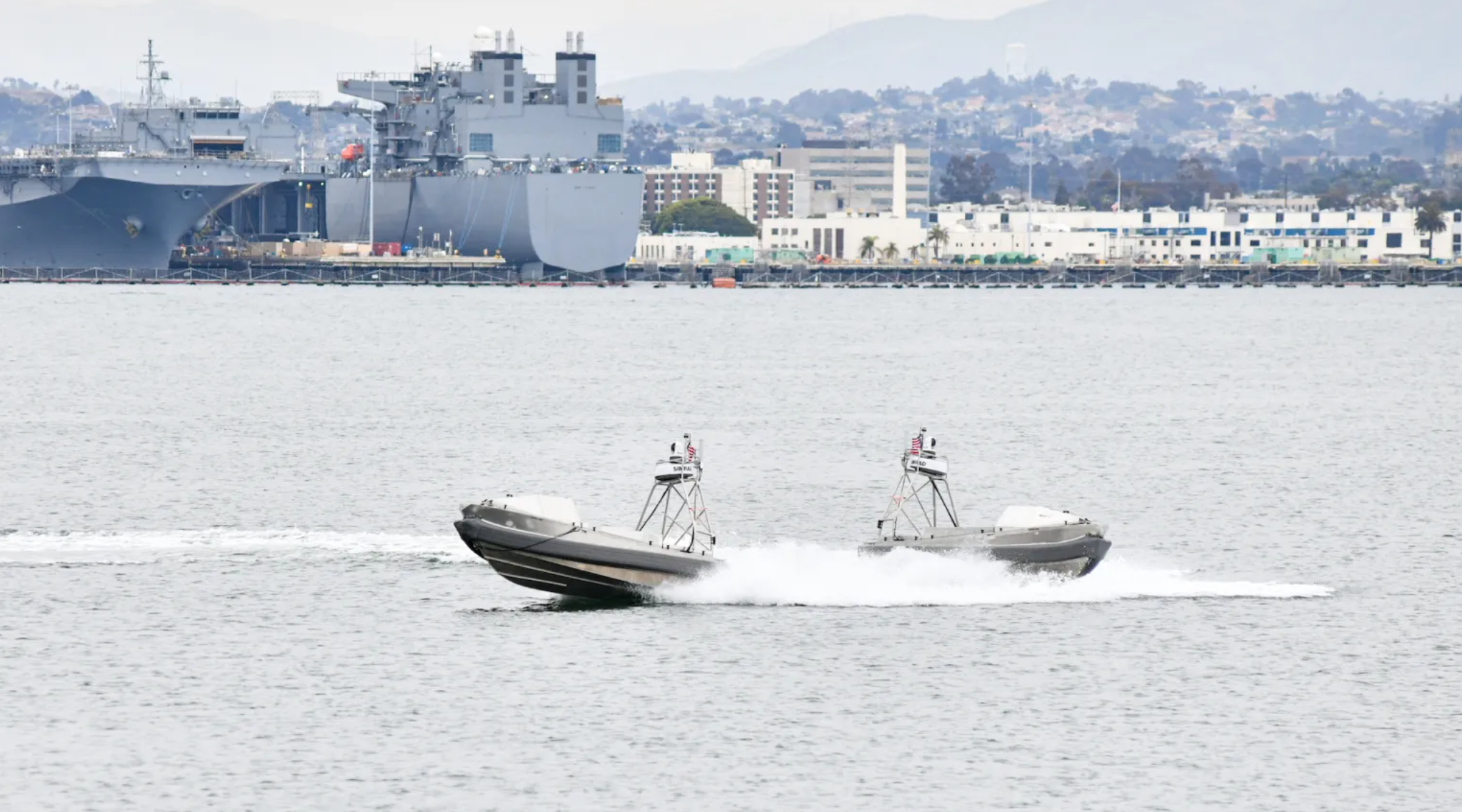
Navy to establish USVRON 7 in San Diego, adding another robotic ship squadron to the force
The Navy is set to establish Unmanned Surface Vessel Squadron 7 (USVRON 7) in May, further expanding its fleet of small autonomous vessels like the Global Autonomous Reconnaissance Craft (GARC). This move aligns with Chief of Naval Operations Adm. Lisa Franchetti’s push to rapidly integrate robotic and autonomous systems, ensuring the force remains prepared for future conflicts, including a potential confrontation with China in the Taiwan Strait. With the Navy aiming to produce up to 32 GARCs per month, USVRON 7 will play a key role in scaling, operating, and maintaining these platforms to enhance maritime warfare capabilities.

Pentagon Ramps Up Tech Development for Replicator Program
The Replicator program is redefining the speed and scale of software development within the Defense Department, aiming for full deployment by August 2025. Rear Adm. Christopher Sweeney emphasized the initiative’s break from traditional defense projects, highlighting its rapid iteration cycles and commercial-style software development tempo. With industry collaboration and accelerated feedback loops, Replicator is poised to enhance autonomous system capabilities across air and maritime domains while reducing manpower requirements and improving system interoperability.

First Replicator Initiative Capability on Track for August, Officials Say
The Navy's Replicator initiative, designed to deploy lethal swarms of unmanned systems, is set to achieve its first operational milestone by August, officials announced at the West 2025 conference. The program, aimed at countering threats in the Indo-Pacific, seeks to rapidly integrate diverse autonomous systems through a flexible software-driven approach, departing from traditional acquisition timelines. However, while the initiative has secured initial funding, questions remain about long-term implementation and coordination between military branches and the Pentagon.

Killer Of Enemy Warships — U.S. Navy Boosts GARC USV’s Production As World’s Strongest Navy Looks To Counter World’s Biggest
As armed forces worldwide adopt unmanned platforms, the US Navy has decided to boost production of its Global Autonomous Reconnaissance Craft (GARC) to 32 units per month to field these unmanned surface vessels (USV) in the Pacific to counter China.

Navy ramping up production of autonomous GARC vessels
The Navy is aiming to boost production of Global Autonomous Reconnaissance Craft to a rate of 32 systems per month amid a broader push by the sea service to field more robotic platforms to counter China in the Pacific.

New larger autonomous vessels, with evocative names like Ghost Shark and Manta Ray, are aimed at gathering intelligence and countering new threats at sea
New larger autonomous vessels, with evocative names like Ghost Shark and Manta Ray, are aimed at gathering intelligence and countering new threats at sea.
Where Robots Dare, How the Navy’s New Rating is Shaping Current and Future Ops
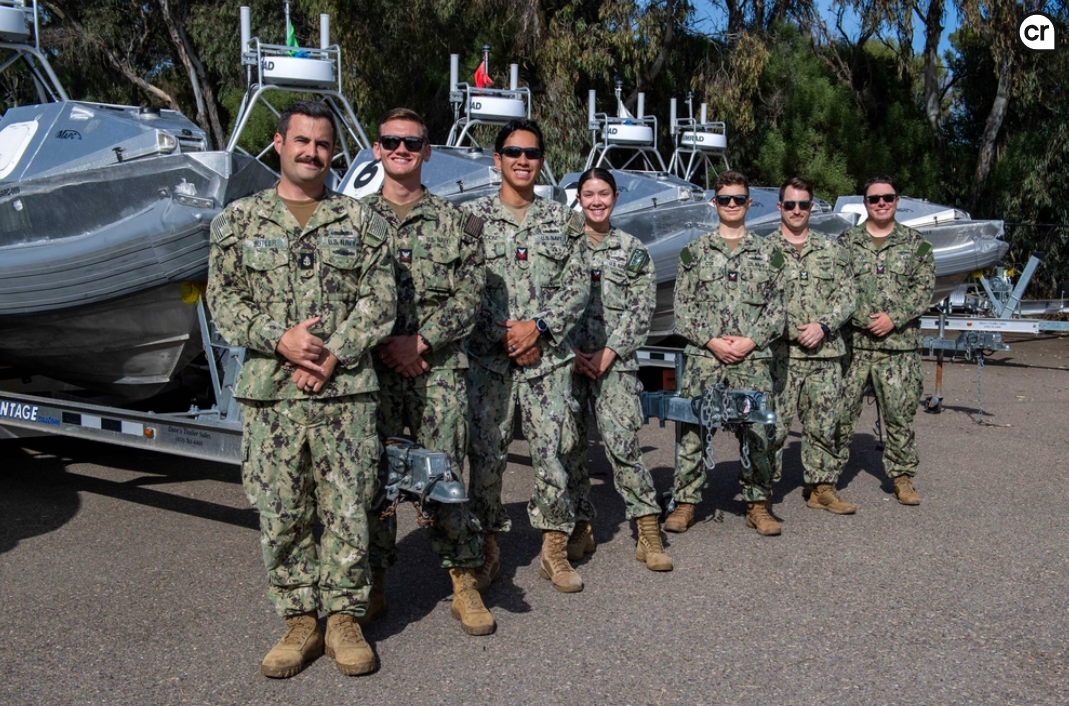
Sailors assigned to Unmanned Surface Vessel Squadron 3 (USVRON 3) pose with Global Autonomous Reconnaissance Crafts (GARC) at Naval Base Point Loma, Nov. 26, 2024. Robotics Warfare Specialists enable Robotic Autonomous System (RAS) operations and maintenance at the tactical edge and are subject matter experts for computer vision, mission autonomy, navigation autonomy, data systems, artificial intelligence, and machine learning on the RAS platforms. (U.S. Navy photo by Mass Communication Specialist 1st Class Kelby Sanders)
Where Robots Dare, How the Navy’s New Rating is Shaping Current and Future Ops
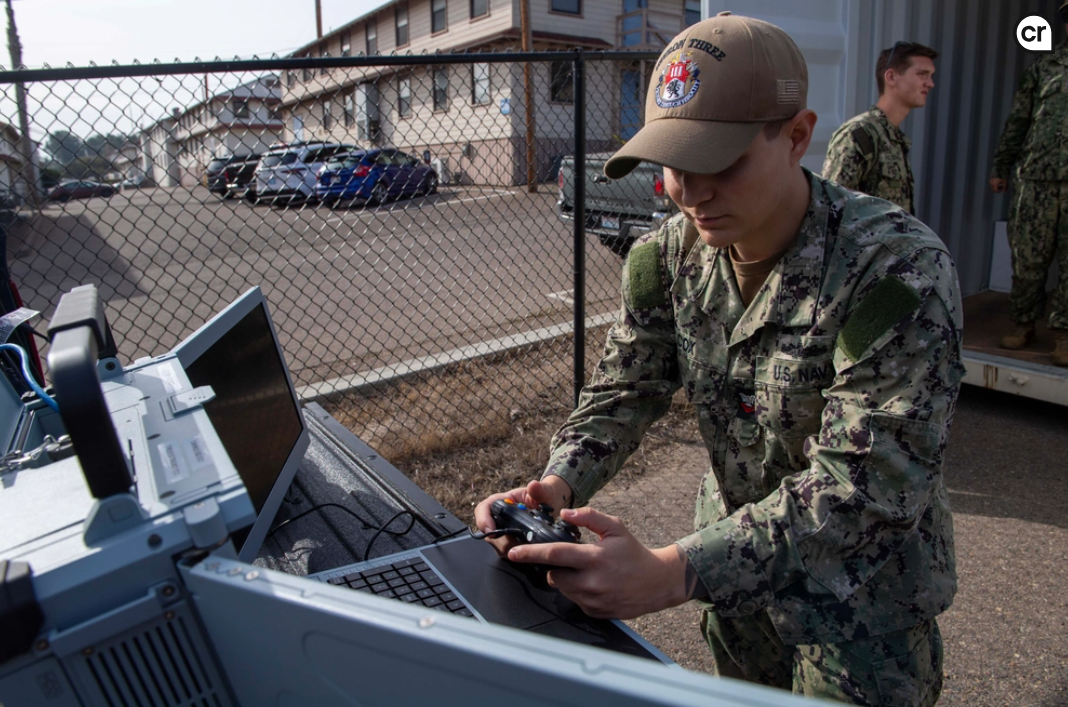
Robotics Warfare Specialist 2nd Class Kaleb Cox, assigned to Unmanned Surface Vessel Squadron 3 (USVRON 3), sets up a Global Autonomous Reconnaissance Craft (GARC) control station during a training evolution at Naval Base Point Loma, Nov. 26, 2024. Robotics Warfare Specialists enable Robotic Autonomous System (RAS) operations and maintenance at the tactical edge and are subject matter experts for computer vision, mission autonomy, navigation autonomy, data systems, artificial intelligence, and machine learning on the RAS platforms. (U.S. Navy photo by Mass Communication Specialist 1st Class Kelby Sanders)
Where Robots Dare, How the Navy’s New Rating is Shaping Current and Future Ops
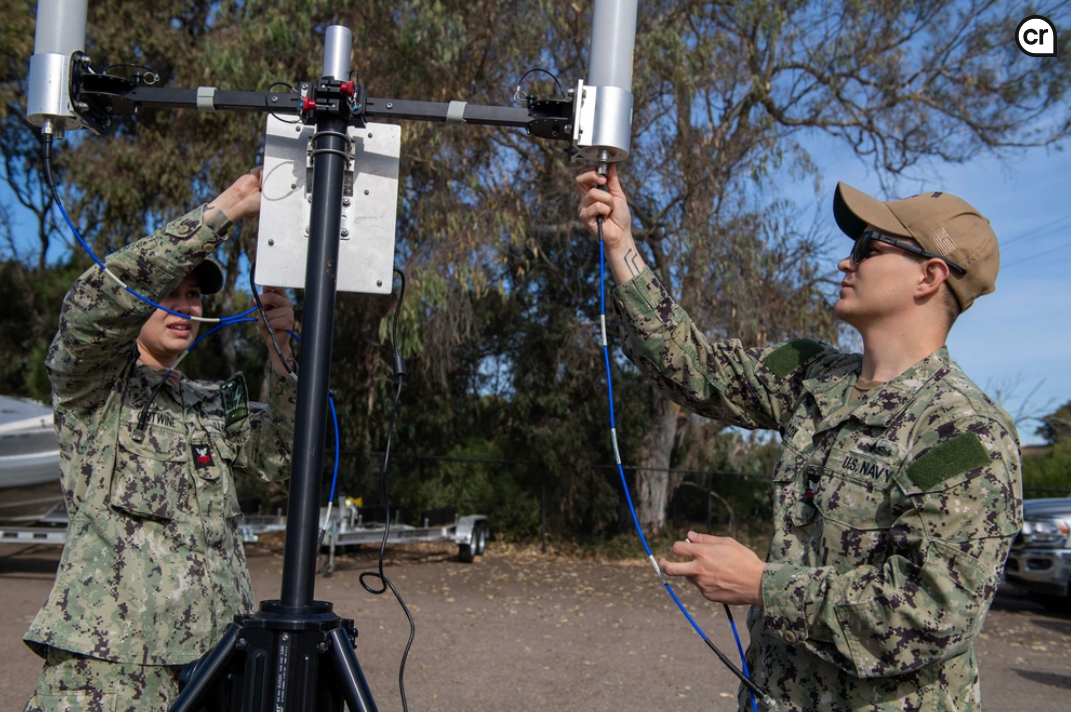
Information Systems Technician 1st Class Selena Ortwine, left, and Robotics Warfare Specialist 2nd Class Kaleb Cox, assigned to Unmanned Surface Vessel Squadron 3 (USVRON 3), set up a Global Autonomous Reconnaissance Craft (GARC) control station during a training evolution at Naval Base Point Loma, Nov. 26, 2024. Robotics Warfare Specialists enable Robotic Autonomous System (RAS) operations and maintenance at the tactical edge and are subject matter experts for computer vision, mission autonomy, navigation autonomy, data systems, artificial intelligence, and machine learning on the RAS platforms. (U.S. Navy photo by Mass Communication Specialist 1st Class Kelby Sanders)
Where Robots Dare, How the Navy’s New Rating is Shaping Current and Future Ops
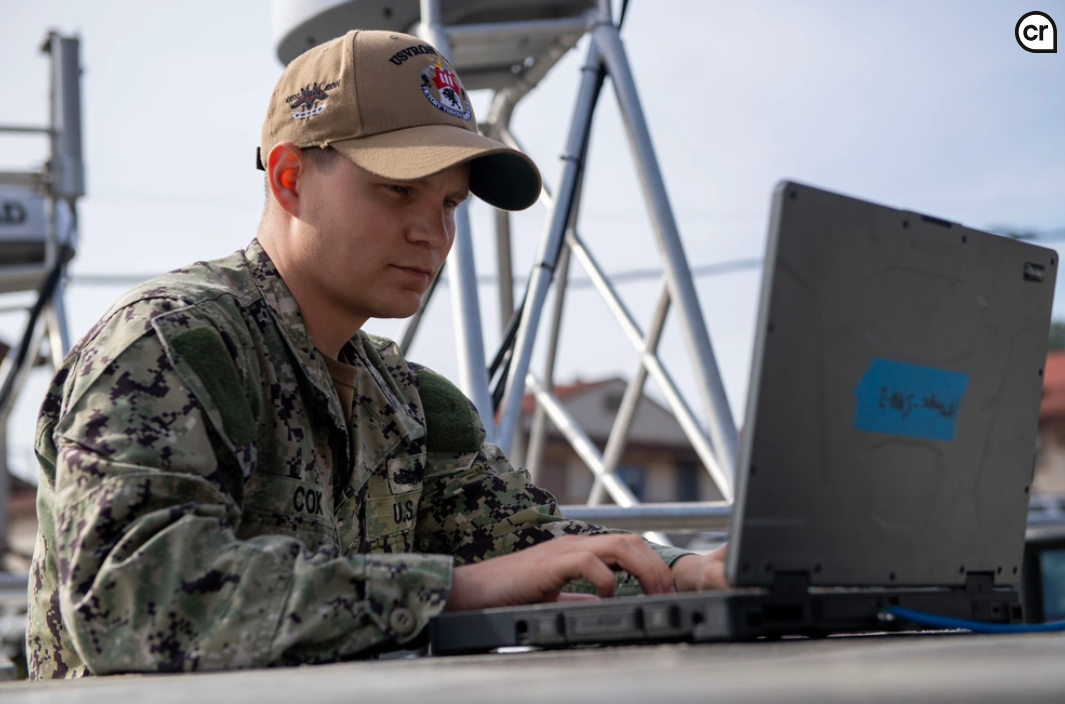
Robotics Warfare Specialist 2nd Class Kaleb Cox, assigned to Unmanned Surface Vessel Squadron 3 (USVRON 3), sets up a Global Autonomous Reconnaissance Craft (GARC) control station during a training evolution at Naval Base Point Loma, Nov. 26, 2024. Robotics Warfare Specialists enable Robotic Autonomous System (RAS) operations and maintenance at the tactical edge and are subject matter experts for computer vision, mission autonomy, navigation autonomy, data systems, artificial intelligence, and machine learning on the RAS platforms. (U.S. Navy photo by Mass Communication Specialist 1st Class Kelby Sanders).